Friday, October 14, 2011

Winter in Monte Nido?


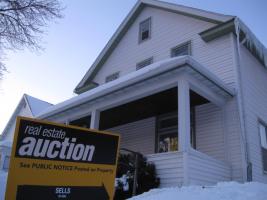
Yeah, it was 100 degrees in the Valley but in Monte Nido Wednesday they created a winter wonderland using snow blowers for a Lexus Commercial on Cold Canyon Road. I often write of how much I love this part of Malibu Canyon, and there are some fantastic properties for sale here. It's funny to see it in snow, which never (well. almost never) happens. Reminds me of Taos, New Mexico.

Thursday, October 6, 2011

Good News: Malibu Condo prices remain low: Bad News: Malibu Condo prices remain low


Per The Malibu Times:
Tough condo market suggests housing recovery still far off
By Rick Wallace / Special to The Malibu Times
Published:
Tuesday, October 4, 2011 11:00 PM PDT


In 2008, even amid the national housing collapse, the median price for a single-family home sale in Malibu rose from $3,050,000 to $3,250,000. It seemed Malibu's pricey lifestyle was immune to market calamity. But only on the surface.

That same year, warnings of impending doom were evident in the very same 90265 ZIP code: the condo market. While home prices were flying high, condos stopped selling. Only 44 condos sold in all of 2008, where there had been 87 such sales just two years earlier. Most particularly, condos not located directly on the sand lost their appeal to a stingier buying public: only 30 inland condos sold, compared to 70 just two years earlier.

Malibu's condo market, particularly the typical inland version, is the link between the luxurious Malibu real estate market and the rest of the real world. When the buying public wants to make a move from Santa Monica or Agoura Hills into the Malibu market, the condo market is the first point of impact; it is priced most similarly to the next lowest-tier from which the buyer steps up (or down) in wealth.

Malibu's condo market shows the way for all market prices above. Want to know how your $5 million estate is doing in the marketplace 18 months in advance? Looking at condo sales at the low end now might be a solid indicator. Homes priced at $1 million today are probably looking at market results in six months similar to what low-end condos are doing now, as a general guess.

And what are low-end condos doing now?

Not much.

Sales in 2011 have been poor, nearly matching the collapse of 2009, offering little inspiration that a recovery is coming to the housing market any time soon.

The local condo market saw a median drop from 2008 at $1,095 million to just $560,000 by 2010 for all condos, including ones directly on the sand. This year, it has inched up slightly to $590,000, hinting at some price stability. On the other hand, while 64 condos sold last year (after 40 sales for all of 2009), this year projects to 57, a slight drop. The total volume of sales is projected to be less than last year, also. Instead of a boost in the market, there has been retreat.

The median annual sales price for inland condos is even more discouraging: $1,030,000 in 2008, dropping to $505,000 last year. So far in 2011, that figure is only $495,000. Values are less than half of what they were three years ago.

During 2007, the very lowest condo sales price in Malibu was $567,000. Last year it was $252,000. So far in 2011: $272,000.

Since condos showed the way to this darker market environment, it is the commodity trusted to guide the higher price tiers out of the doldrums, to be the indicator of better times to come.

Consider how many complexes throughout Malibu are performing:

* One of Malibu's two lowest-priced neighborhoods, the 104-unit Malibu Canyon Village along Civic Center Way, had 10 sales in a spirited 2010, all at $430,000 or less. This year, there have been only four sales so far, with the highest going for $390,000.

* The Malibu Villas, near Paradise Cove, have been decimated unlike anywhere in Malibu. After a couple of sales over $1 million in 2006, (and a half-dozen sales above $800,000 during the glory days), literally nothing sold in 2008, despite dozens of listings that year. The 15 sales since have been for $500,000 or less, including a paltry three deals this year for around $400,000 each.

* The Zumirez View Terrace at Zumirez Drive and Pacific Coast Highway had many sales over $700,000 during 2005-2007, followed by a two-year slowdown. A few sales of less than $500,000 have been made in the last two years.

* Even more illustrious complexes like the Zuma Bay Villas, on the backside of Point Dume, have felt the squeeze. Just two sales have been made for 2010-11. Both of have gone for less than $1 million. By contrast, through 2006-2007, nine units sold for an average of more than $2 million.

Slim sales tallies at surprisingly low prices are the norm for virtually every complex in town. It was not supposed to be that way in 2011. The great, long-awaited hope-that a booming leap of condo sales would lead to price stability, followed by upward movement of single-family home values and a housing recovery-will have to wait longer.


Couple of things here. There's no direct link between Malibu Condos and Malibu housing. Statistically perhaps, but the number of 15 million dollar plus sales this year exceeds those of years past. It's the PRICE POINT that has changed. What HAS happened in the price point where Malibu condos languish: Single family residences have declined at that price point to where they represent a much better value for the money. Also, the writer is concentrating on complexes that just aren't the hot tickets in Malibu that other like-priced condos are. He's using medians and in a thin market that gets you into trouble with your conclusions. This complex near Latigo Canyon for example. Take a look at the location:


This complex(also pictured above the lead for this story)will always see sales because it's right on the sand. The problem with Malibu condos is that the preponderance of them are NOT on the sand, often up to a mile or more away. So there's that.

Also, Malibu condos have notoriously high HOA fees. When you factor them in it makes more sense to go SFR, and you get a private pool and yard with ocean view ( labrador not included)

Ocean this way>>>>>>>>>>>>>>>>>>>>>>>>>>>>>>>>>>>>
So dear reader, accept the statistics quoted in the article with a grain of sea salt.

Thursday, July 21, 2011

Housing and Economic Forecast Points to Rising Activity


Home sales are expected to stay on an uptrend through 2012, although the performance will be uneven with mortgage constraints weighing on the market, according to experts at a residential real estate forum today at the Realtors® Midyear Legislative Meetings & Trade Expo here.

Lawrence Yun, NAR chief economist, said existing-home sales have been underperforming by historical standards and will rise gradually but unevenly. “If we just hold at the first-quarter sales pace of 5.1 million, sales this year would rise 4 percent, but the remainder of the year looks better,” Yun said. “We expect 5.3 million existing-home sales this year, up from 4.9 million in 2010, with additional gains in 2012 to about 5.6 million – that’s a sustainable level given the size of our population.”

Mortgage interest rates should rise gradually to 5.5 percent by the end of the year and average 6.0 percent in 2012 – still relatively affordable by historic standards.

“A huge volume of cash sales, supported by the recovery in the stock market, show that smart money is chasing real estate. This implies that there could be a sizeable pent-up demand if mortgages become more readily accessible for qualified buyers,” Yun said. “The problem isn’t with interest rates, but with the continuation of unnecessarily tight credit standards that are keeping many creditworthy buyers from getting a loan despite extraordinarily low default rates over the past two years.”

Yun said that if credit requirements returned to normal, safe standards, home sales would be 15 to 20 percent higher. He added that some parents are buying homes with cash for their children, and offering them loans which provide better returns than bank accounts or CDs.

Yun projects the Gross Domestic Product to grow 2.5 percent this year and 2.7 percent in 2012, adding 1.5 million to 2 million jobs yearly over the next two years. The unemployment rate should decline to 8.8 percent by the end of 2011 and average 8.6 percent next year, returning to a normal level of 6 percent around 2015.

Housing starts are forecast to rise but remain below long-term trends, reaching 603,000 in 2011, up from 595,000 last year, and continue growing to 908,000 in 2012. New-home sales are seen at a record low 320,000 this year, rising to 487,000 in 2012. “A recovery in new homes will be slow because of the extra price discount in the existing home market,” Yun noted. In March, the typical new single-family home cost $53,300 more than an existing home.
Inflation appears to be relatively modest for now, with the Consumer Price Index rising 2.9 percent this year. “We’ll be closely watching the impact of fuel costs on consumer spending and inflation – that would slow economic growth, job creation and home sales,” Yun said.

Apartment rents are trending up, and are likely to rise at faster rates as vacancies decline. Following the correction in home prices, it has now become more affordable to buy in most of the country. “Twice as many renters had enough income to buy a home in 2010 in comparison with 2005, so we have a much larger pool of financially qualified renters,” Yun said. “Rising rents and excellent housing affordability conditions will encourage potential buyers who’ve been on the sidelines.”

Yun expects the median existing-home price to remain near $170,000 over the next two years, which would mark four consecutive years of essentially no meaningful price change.

Frank Nothaft, chief economist at Freddie Mac, holds similar views on the outlook. “Economic activity will accelerate this year – there will be no double dip in the economy,” he said. Nothaft is more optimistic on job growth, expecting 2.0 million to 2.5 million jobs created in 2011 with unemployment dropping to 8.4 percent by the end of the year.

Nothaft expects the 30-year fixed-rate mortgage to trend up to 5.25 percent by the end of the year, and for home sales to rise 5 percent. “National home price indices are close to a bottom and prices are likely to bottom sometime this year,” he said.

Refinancing activity in 2011 will be only half of what it was last year. “As a result, banks may become more willing to lend to home buyers,” Nothaft said.

The National Association of Realtors®, “The Voice for Real Estate,” is America’s largest trade association, representing 1.1 million members involved in all aspects of the residential and commercial real estate industries

Monday, July 11, 2011

FHA to offer 12-month grace period to unemployed borrowers


The Federal Housing Administration says the extended grace period for out-of-work borrowers applies only to FHA-backed loans.

Some unemployed Californians facing foreclosure may be able to delay or avoid losing their home. Starting August 1, the FHA will allow qualified homeowners with backed mortgages to stop making monthly payments for 12 months before the foreclosure process begins. Banks servicing the loans would need to approve of the deal.

Gugin said allowing some unemployed homeowners to go without making a monthly payment for twelve months will help some families. About a fifth of the home loan market in California are mortgages backed by the FHA, Gugin estimates.

"I don't think we're going to see a point where we go from 25 (thousand foreclosures) back to five in a year. I think it's going to be a gradual decline and perhaps this is the year where we see the gradual decline because we haven't yet," Gugin said.

"There's still the middle person in the servicer that has to implement the program, and that can still remain a challenge regardless of what the policy (is), Gugin said. "It gives us another option, but it's not a silver bullet."

The extra grace period also applies to homeowners in the government's Making Home Affordable modification program.

Thursday, June 23, 2011

Internet Bargain?

ONLINE

I found this, or rather, one of my clients found it, which brought it to my attention. I'm always amazed at what my clients find searching our ZIP Realty Website. The market is currently chock full of opportunity, and interest rates haven't been this low since post war America, and by that I mean post WW1!
So, back to this place: looks pretty neat, huh? The price is 50k under the market in that neighborhood. I get pretty excited. Then I visit there. Ho-ly shit. I'm not sure what kind of filter the guy that took these pictures used, but I want one. The place was a hodgepodge of poorly done and mismatched improvements, the floor reminiscent of the haunted miners shack in Knotts Berry Farm. There were roaches and spiders scurrying everywhere. That garage looking thing back there? Bootleg guesthouse. The bones of this house are 1941 vintage, but I suspect it was more of a bunkhouse back then; there were several large ranches it could have been a part of in that era. The exterior paint was amateur and the wood peeling everywhere. Major termite damage was visible just upon casual inspection. I told my client who was looking at it (her hands were drawn up tightly together at her chest, body language tells all!)that it would never do for her. There's another guest unit behind the bootleg one, which purports to be permitted. So there's kind of upside if you can save that roof, bring back the garage and get rid of all the termite infested siding. In the home, you'd better plan on jackhammering the slab, and repouring it. While you're at it, add on another bedroom/bath. The tab for all this would probably be about 50k. That makes it even with the neighborhood comps, and you could probably use it as income property.
But the condition in person vs the photo online was like night and day. I imagine internet dating is a lot like this.
The moral of this tale? BUYER BEWARE! ALWAYS SEE THINGS IN PERSON.
REALITY

Friday, May 6, 2011

Gallup: Time Is Right to Buy


By Steve Cook at RISMEDIA
RISMEDIA, May 5, 2011—Consumer attitudes towards the housing markets are echoing views in the years immediately preceding the peak of the housing boom, according to a new national survey by the Gallup poll. Americans continue to see a buyer’s market in housing, according to an April 2011 Gallup poll. Sixty-nine percent of respondents say now is a good time to buy a house.

Historic Gallup data shows that many Americans also thought it was a good time to buy between 2003 and 2005, when housing prices were increasing and getting financing was relatively easy. Those attitudes began to change in 2006 as some homebuyers began to realize a housing bubble was taking shape in local markets across the country.

Men (74 percent) are about 16 percent more likely to see now as a good time to buy a home than women (64 percent). Those living in the West are the most likely to hold this view (75 percent), 17 percent more than those living in the South (64 percent). Americans making $75,000 or more a year (86 percent) are 18 percent more likely to see 2011 as a good time to buy a home than those making $30,000 – $75,000 (73 percent), and 72 percent more likely than those making less than $30,000 (50 percent).

Americans’ expectations for home prices in their local markets are slightly better now than they were in January. Currently, 30 percent of Americans say home prices will increase and 28 percent say they will decrease in the next year.

Friday, March 11, 2011

Research Firm Says U.S. Housing Has Never Been This Undervalued


The continuing depreciation of residential property values at the end of last year has made housing look more undervalued relative to income than ever before, according to analysts at the research firm Capital Economics.

Based on the latest Case-Shiller home price index, Capital Economics’ study shows that in the fourth quarter of 2010, housing was 21 percent undervalued when compared with disposable income per capita.

Looking at data included in the index published by the Federal Housing Finance Agency (FHFA), the firm found that housing in Q4 was 15 percent undervalued as measured against individuals’ disposable income.

Capital Economics says its results illustrate “housing is exceptionally undervalued,” and the gap is getting bigger. In its third quarter 2010 report, the research firm pegged the Case-Shiller index readings as 19 percent undervalued and the FHFA index as 14 percent below what would constitute a balanced housing value in relation to income.

The recent fall back in house prices, coupled with low rates, explains why the initial monthly mortgage payment on a median priced house bought with a 20 percent down payment has fallen to a record low of 13 percent of the median income, Capital Economics pointed out in its report.

Home prices in 29 states hit a new cycle low in the fourth quarter of last year, and the research firm says on both
the FHFA and Case-Shiller house price indices, housing now appears close to fair value when set against rents.

Such favorable valuations mean there is plenty of scope for housing to perform well in the medium-term, according to Capital Economics, but over the next year, the firm says the combination of weak demand, high supply, and more forced sales of foreclosed properties will push prices lower.

As Capital Economics pointed out, the sharp fall in the mortgage delinquency rate at the end of last year means there are fewer homes in the foreclosure pipeline, but the elevated number of defaulted properties still in process means home values will continue to be negatively impacted by the presence of distress for some time.

On top of low prices, mortgage rates have fallen back a bit in recent weeks, leaving them even further below the 20-year average of 7 percent, the firm’s analysts wrote. Last week marked the third consecutive week that rates have continued to decline. A national survey conducted by Freddie Mac shows that the average 30-year fixed-rate has dropped to 4.87 percent, while the 15-year fixed-rate has slipped to 4.15 percent.

When you wrap declining home prices and historically low mortgage rates together, Capital Economics says, “The incredibly favorable affordability and valuation environment is the housing market’s one big positive.”

But despite this fact, mortgage applications have remained subdued. While buyer demand is notably weak by conventional standards, Capital Economics says the decrease in mortgage apps of late reflects, at least in part, the prevalence of cash buyers.

The company says the recent “de-valuing” of housing stock appears to be attracting cash buyers and investors back into the market.

They have driven 70 percent of the increase in existing home sales seen since last July, particularly among heavily discounted foreclosed homes, Capital Economics pointed out. Over that same period, first-time buyers have been responsible for just 6 percent of the increase in sales of previously owned homes.